
Sossusvlei and Deadvlei: separate the stops
Two neighbouring names describe different landscape settings. Give each a clear place in the plan.
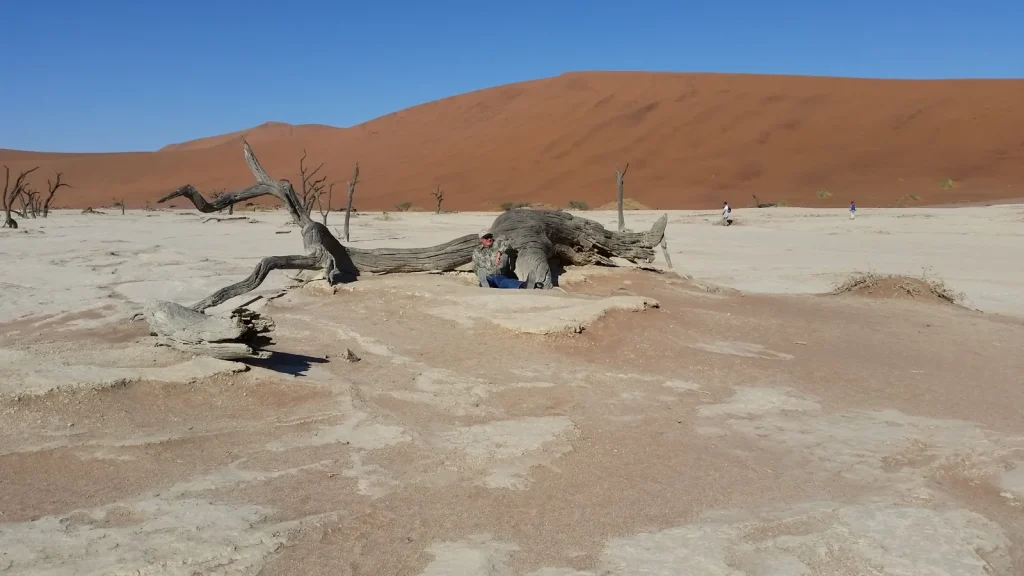
Sossusvlei and Deadvlei often appear together in a travel itinerary. They should still be named separately. The dunes, pale pans and standing dead trees are part of a closely connected landscape, but a photograph of Deadvlei does not make every surrounding dune or stopping place Deadvlei too.
Start with the setting
Use the individual place name when you compare photographs or read an itinerary. At Deadvlei, the contrast between pale ground, dark dead wood and the surrounding dunes creates a very particular composition. A broader Sossusvlei outing may include several dune views and other stops. Check the actual route rather than assuming that one name includes everything you hoped to see.
The official Namib-Naukluft park overview places the dunes at Sossusvlei and Sesriem Canyon within a much larger conservation area. That scale matters: a park name is useful context, but it is not a substitute for a specific meeting place or destination.
| Setting | Look for | Ask before booking |
|---|---|---|
| Sossusvlei area | Dune shapes and broader landscape views | Which named stops are included? |
| Deadvlei | Pale pan, dead wood and surrounding dunes | How does the visit reach the pan? |
| Sesriem | Gateway arrangements and canyon context | Is canyon time included or separate? |
Leave room to look
A tightly packed list can reduce very different places to a sequence of quick photographs. Decide which setting matters most to you, then ask how much time the proposed outing gives it. A person interested in small surface details may make different choices from someone who wants a broad landscape view.
Read our guide to dune light for a way to approach the photographs, and keep Sesriem Canyon as its own decision. On the day, follow current local guidance and use the established visitor routes. A clear itinerary should help you understand the places without treating the landscape as interchangeable scenery.