
Read the dune through its light
Look at the shadow boundary, the surrounding scale and the quieter details before taking the photograph.
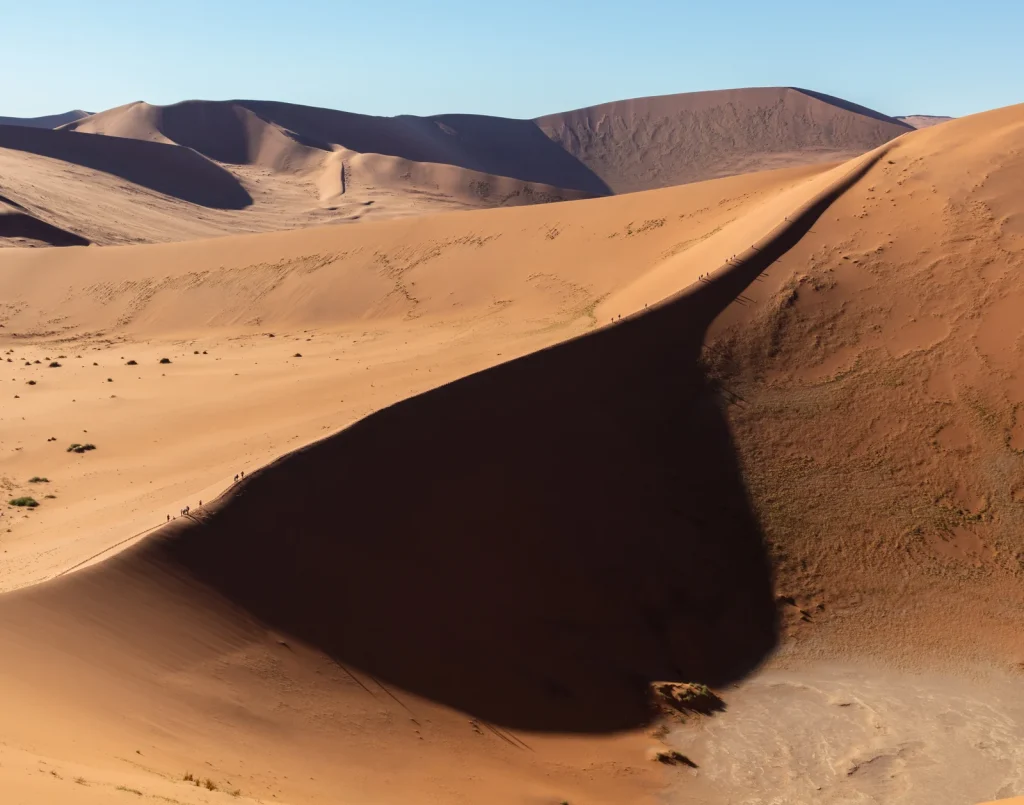
The edge between a dune’s lit face and its shadow can make a landscape seem sharply drawn. Begin by looking at that boundary before deciding where the photograph should begin and end. The shape of the shadow, the slope carrying it and the space around it are all part of the subject.
Make one clear decision
A broad view can describe the relation between several dunes. A closer frame can draw attention to a single curve or a small change in the sand. Neither is automatically the better picture. Choose the distance that explains what caught your attention, and keep enough surrounding ground or sky for the shape to remain understandable.
The UNESCO account of the Namib Sand Sea describes a dynamic dune system. Its regional discussion of fog and desert processes gives useful context, but it should not be turned into a promise of fog at a particular inland viewpoint. Work with the conditions actually in front of you.
Give the frame a second look
Before moving on, check the corners of the composition. An incomplete slope can make the scale confusing; a narrow strip of sky can compete with the dune edge. A vertical frame and a horizontal frame tell different stories. Turn the camera deliberately rather than relying on a later crop to repair every decision.
- Keep a wide view when the relation between several dunes is the point.
- Use a closer frame when a shadow edge or surface detail is the subject.
- Include ordinary surroundings when they help explain distance and scale.
- Leave the scene as it is rather than moving objects or asking someone to disturb a surface for the picture.
Camera settings and equipment are secondary to paying attention. Review whether the brightest sand retains detail and whether a dark area still describes a real shape. Avoid processing that turns every dune into the same intense orange.
When you share a photograph, name the location as accurately as you can. Our Sossusvlei and Deadvlei comparison explains why those names need care. For the practical side, use the planning guide to connect your photographic priorities with the confirmed arrangements for the visit.